Skip to content
From air fresheners and insecticides to hair sprays and car care products, the demand for aerosol products is skyrocketing. For manufacturers, the challenge isn’t just filling the cans—it’s labeling them accurately at high speeds.
Labeling a cylindrical tinplate can might seem simple, but aerosol cans present unique challenges: welding seams, embossed top/bottom rims, and the need for explosion-proof safety measures.
As a professional labeling machine manufacturer, AUTmachine helps you navigate these challenges. In this guide, we will explore how to choose the right aerosol can labeling machine for your production line.
1. The Core Challenges of Labeling Aerosol Cans
Before choosing a machine, you must identify your specific container constraints. Unlike standard glass bottles, aerosol cans often have:
- The “Carved” or Embossed Areas: Many cans (like the ones from FoumanChimie or SC Johnson) feature embossed logos or warnings near the top or bottom rim. If the label covers these bumps, it causes unsightly wrinkles and bubbles.
- The Welding Seam: Tinplate cans have a vertical seam. For premium products, the label ends should not overlap exactly on this seam, or conversely, you might want to cover the seam perfectly.
- Explosion Risk: Since aerosol contents are pressurized and flammable, the labeling equipment must often be designed with anti-static or explosion-proof electrical components.
2. Hot-Melt (Roll-Fed) vs. Self-Adhesive: Which to Choose?
There are two main technologies for labeling spray cans. Your choice depends on your production volume and budget.
A. Hot-Melt Roll-Fed Labeling Machine (The High-Speed Choice)
This is the industry standard for mass production (e.g., insecticides, air fresheners).
- How it works: It cuts labels from a continuous roll of BOPP film and applies them using hot glue.
- Pros:
- Incredible Speed: Can run 6,000 to 24,000 cans per hour (BPH).
- Lower Material Cost: BOPP roll labels are significantly cheaper than stickers.
- Durability: The labels are waterproof and scratch-resistant.
- Best for: Long runs of the same product size.
B. Self-Adhesive (Sticker) Labeling Machine
- How it works: Applies pre-cut pressure-sensitive stickers.
- Pros:
- Premium Look: Allows for transparent “no-label” looks or textured paper.
- Flexibility: Easier to switch between different bottle sizes.
- Best for: Cosmetics, smaller batches, or premium specialized sprays.
3. The “Fixed-Point” TechnologyOne of the most frequent questions we get at AUTmachine
The answer is Yes, but it requires a specialized Orientation System.
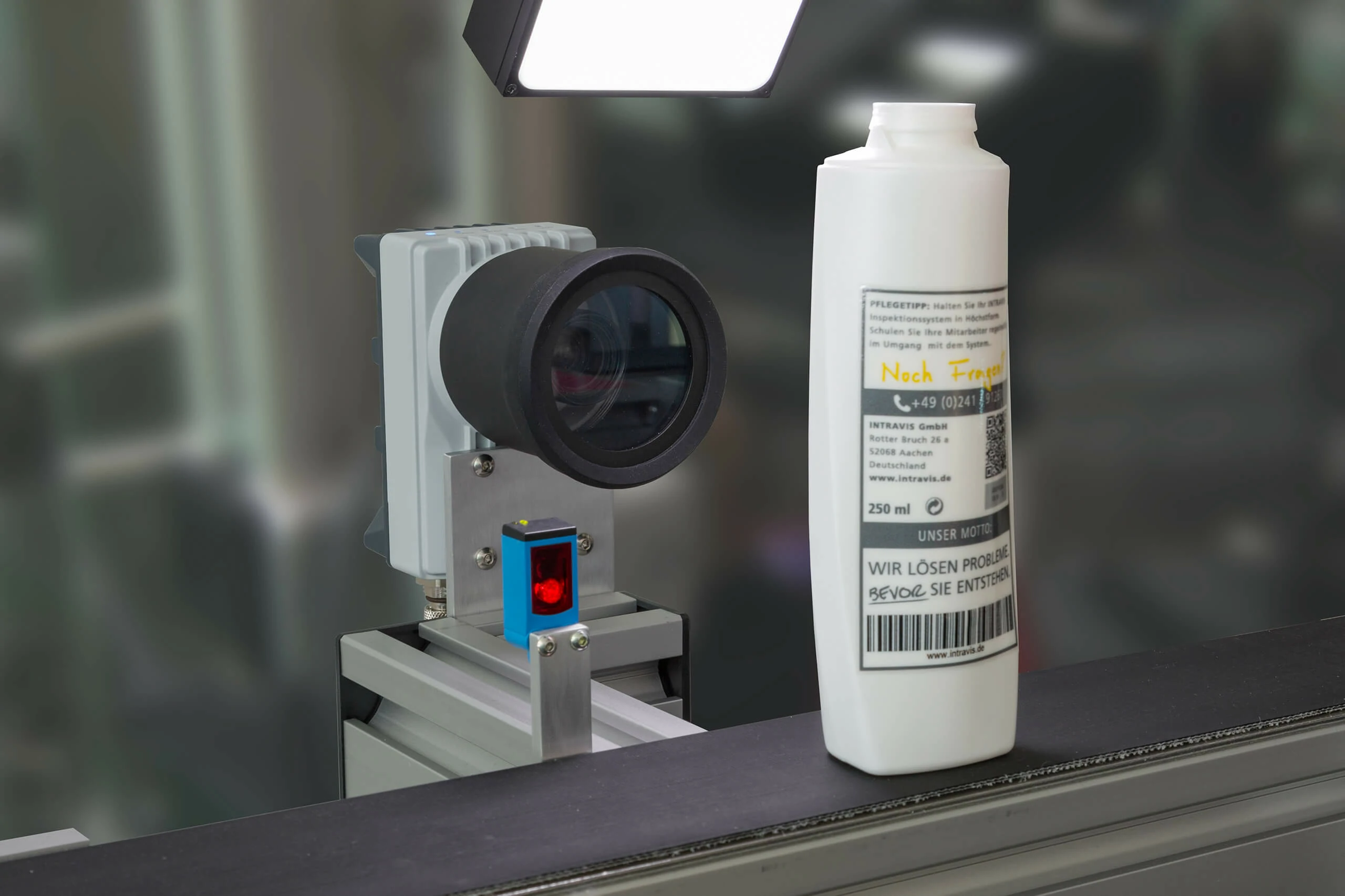
For standard round bottle labelers, the machine simply spins the bottle and slaps the label on. But for aerosol cans with carved zones, we integrate Vision Sensors or Notch Detection Sensors.
The label is applied precisely between the embossed areas, ensuring a smooth, wrinkle-free finish.
The machine rotates the can.
The sensor detects the “eye mark” or the color difference on the can body.
The system calculates the exact starting point.
4. Integration with Your Production Line
An aerosol labeling machine never works alone. To maximize efficiency, your machine should feature:
- Automatic Coding: Integration with CIJ (Inkjet) or Laser printers to print Batch Numbers and Expiry Dates directly on the label or the can bottom.
- Accumulation Tables: To buffer cans if the downstream packing machine stops.
- Safety Guards: Fully enclosed chassis to prevent injury and contain any potential leaks.
Conclusion: Why Choose AUTmachine?
At AUTmachine, we don’t just sell standard equipment; we engineer solutions. Whether you need a high-speed Hot-Melt Roll-Fed machine for your insecticide line or a precise Self-Adhesive Labeler for cosmetic sprays, we customize the orientation system to fit your specific can dimensions.
Ready to upgrade your aerosol production line?
Contact our engineering team today for a free consultation and a factory-direct quotation.
Check Out Our Aerosol Can Labeling Solutions Here.
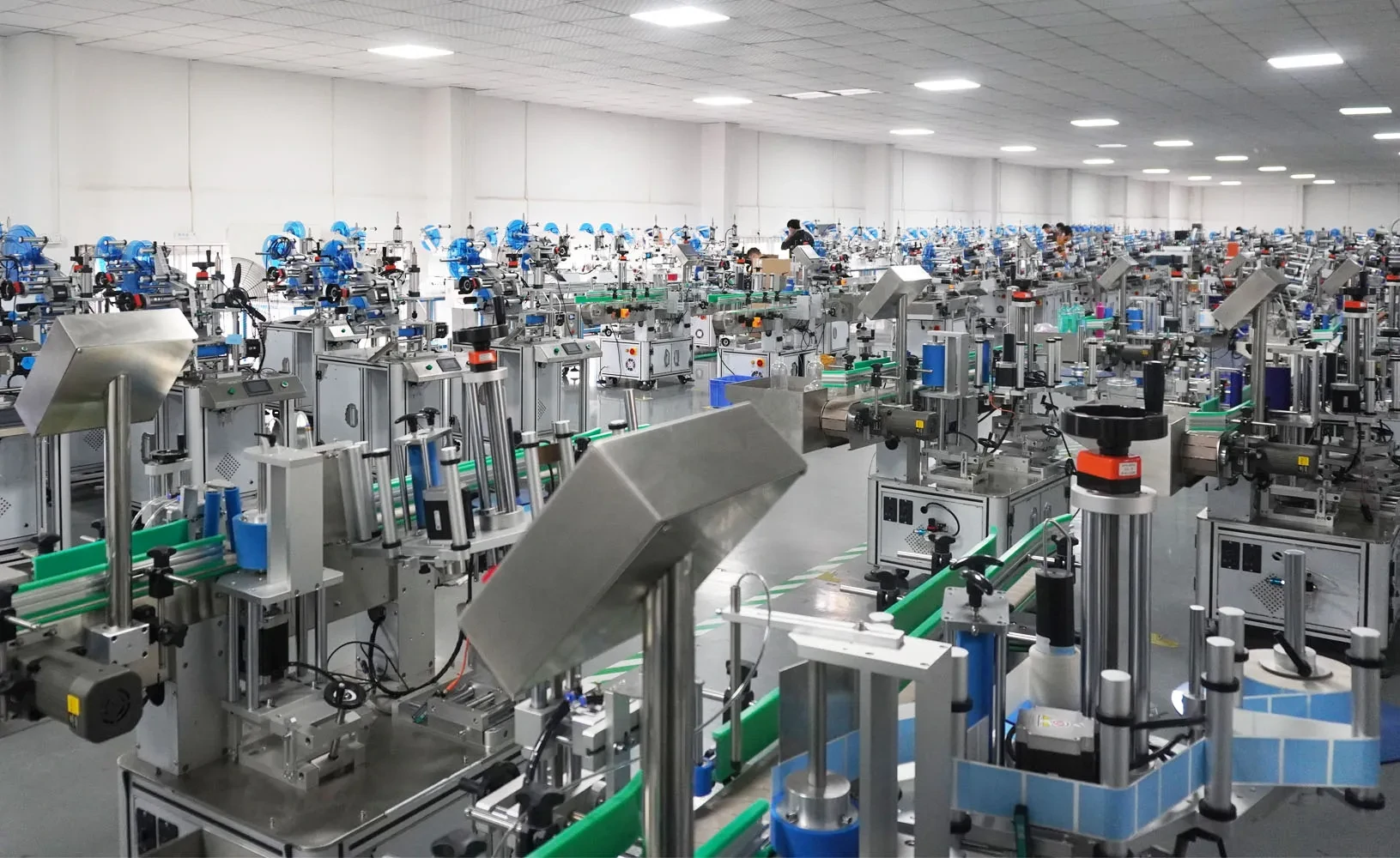
Get Your Perfect Labeling Machine Today
Send samples or visit for a live demo!
FAQ
The machine ensures high precision with a labeling accuracy of ±1.0mm.
It accepts BOPP label rolls with an Inner Diameter >152mm and an Outer Diameter <600mm.
The machine requires a total power capacity of 6Kw and an air pressure supply of 5 Kg f/cm².
The dimensions are 1600mm(L) x 1300mm(W) x 2100mm(H), and it weighs approximately 2000Kg.