Skip to content
Understanding food labeling requirements is important whether you are a consumer browsing a grocery store shelf or a food producer planning packaging and labeling. In the United States, most packaged foods must display a Nutrition Facts label that shows calories, fats, sugars, and other nutrient information. However, there are important exceptions where nutrition labeling is not required under federal rules.
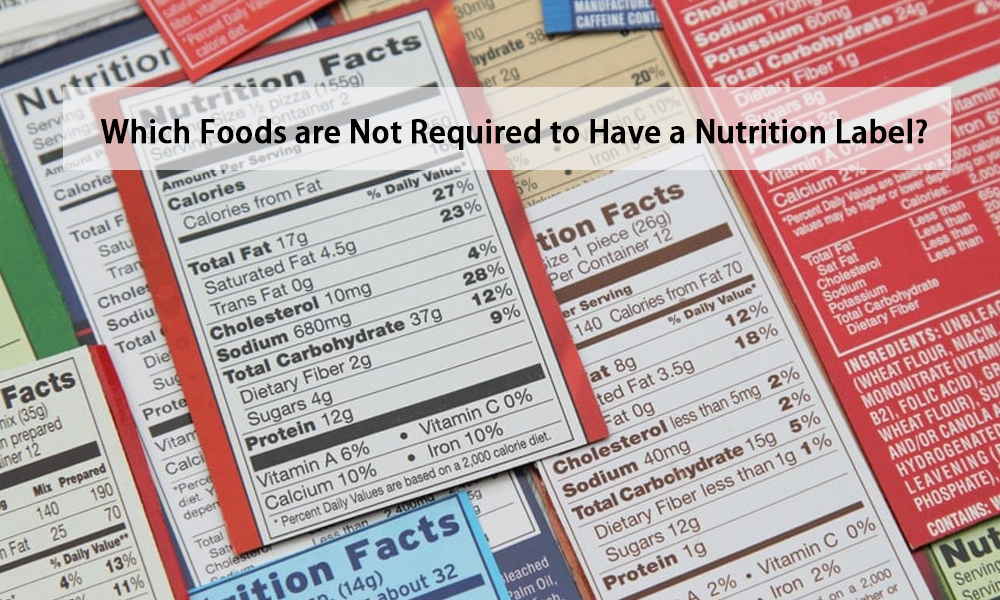
What Is A Nutrition Label And Why Do We Have Them?
A nutrition label — also known as a Nutrition Facts panel — is a required part of food packaging that provides standardized information about calories and key nutrients. In the U.S., the Food and Drug Administration (FDA) generally requires this label on most packaged foods to help consumers make informed dietary choices.
The law that governs this requirement is the Nutrition Labeling and Education Act (NLEA). Under this act, most packaged foods must display a Nutrition Facts panel. However, there are clearly defined exemptions where food products do not have to include this label.
Foods Not Required To Have A Nutrition Label
Below is a list of common foods and conditions where a nutrition label is not required under FDA rules. Each category includes a brief explanation and examples.
1. Fresh Fruits, Vegetables, And Raw Fish
Whole, unprocessed fruits and vegetables that are sold in their natural state usually do not require nutrition labels. The same is true for most raw fish and seafood when not packaged with added ingredients.
Examples:
- Apples, bananas, oranges
- Heads of lettuce, whole carrots
- Raw salmon, shrimp, crab (without added sauces)
Many stores still provide nutrition information on signs or online, but this is voluntary, not mandatory.
2. Foods With Insignificant Amounts Of Nutrients
Some foods contain such minimal amounts of calories or macronutrients that they are exempt from labeling.
Common exempt items:
- Plain coffee beans or instant coffee
- Tea leaves (unflavored)
- Herbs and spices
- Food colors and extracts
These ingredients are typically used in tiny amounts and do not contribute significant calories or nutrients.
3. Foods Sold For Immediate Consumption (Prepared On-Site)
Foods that are prepared and sold for immediate consumption (like from a bakery or deli counter) are often exempt from a Nutrition Facts panel.
Examples:
- Sandwiches made and sold in a deli
- Slices of cake at a bakery
- Salads prepared at a salad bar
However, if the same food is packaged for later sale, the nutrition labeling requirement may apply.
4. Foods In Very Small Packages
If a packaged food has very limited label space (typically less than 12 square inches) and does not make any nutrient or health claims, it may be exempt from carrying a full Nutrition Facts panel.
Examples:
- Mini-size snack packs
- Small candy bars
- Tiny condiment packets
If a claim such as “low fat” or “high in fiber” appears, the exemption no longer applies.
5. Bulk Foods For Further Processing
Products sold in bulk that are not intended for direct retail consumption may be exempt from nutrition labeling as long as they are not sold to consumers with nutrient claims.
Examples:
- Ingredients shipped to other food manufacturers
- Bulk grains or beans sold to a bakery
6. Small Business Exemptions
Companies with very low sales volume can qualify for a small business nutrition labeling exemption.
Criteria (summary):
- Few employees and limited units sold (e.g., fewer than 100,000 units annually)
- Annual gross sales below specified thresholds
These businesses must still file a notice with the FDA to claim the exemption.
7. Certain Raw Meats And Game
Under some rules, raw single-ingredient products like raw meats from non-traditional animals (e.g., game meats) and certain custom-processed meats may be exempt from a Nutrition Facts panel if no nutrient claims are made.
Examples:
- Venison sold directly to consumers
- Wild rabbit or duck
Standard USDA requirements still apply for food safety labels.
8. Medical Foods And Specialty Items
Certain medical foods designed for specific dietary management may also be exempt from a standard nutrition label, depending on their intended use and regulatory class.
Foods That Still Need A Nutrition Label Even If They Fall In Exempt Categories
It is important to note that some foods that would otherwise be exempt must have a Nutrition Facts panel if:
- They make nutrient content claims (e.g., “low sodium”, “good source of calcium”).
- They are packaged for retail sale instead of sold for immediate consumption.
How Food Producers Can Use Labeling Technology
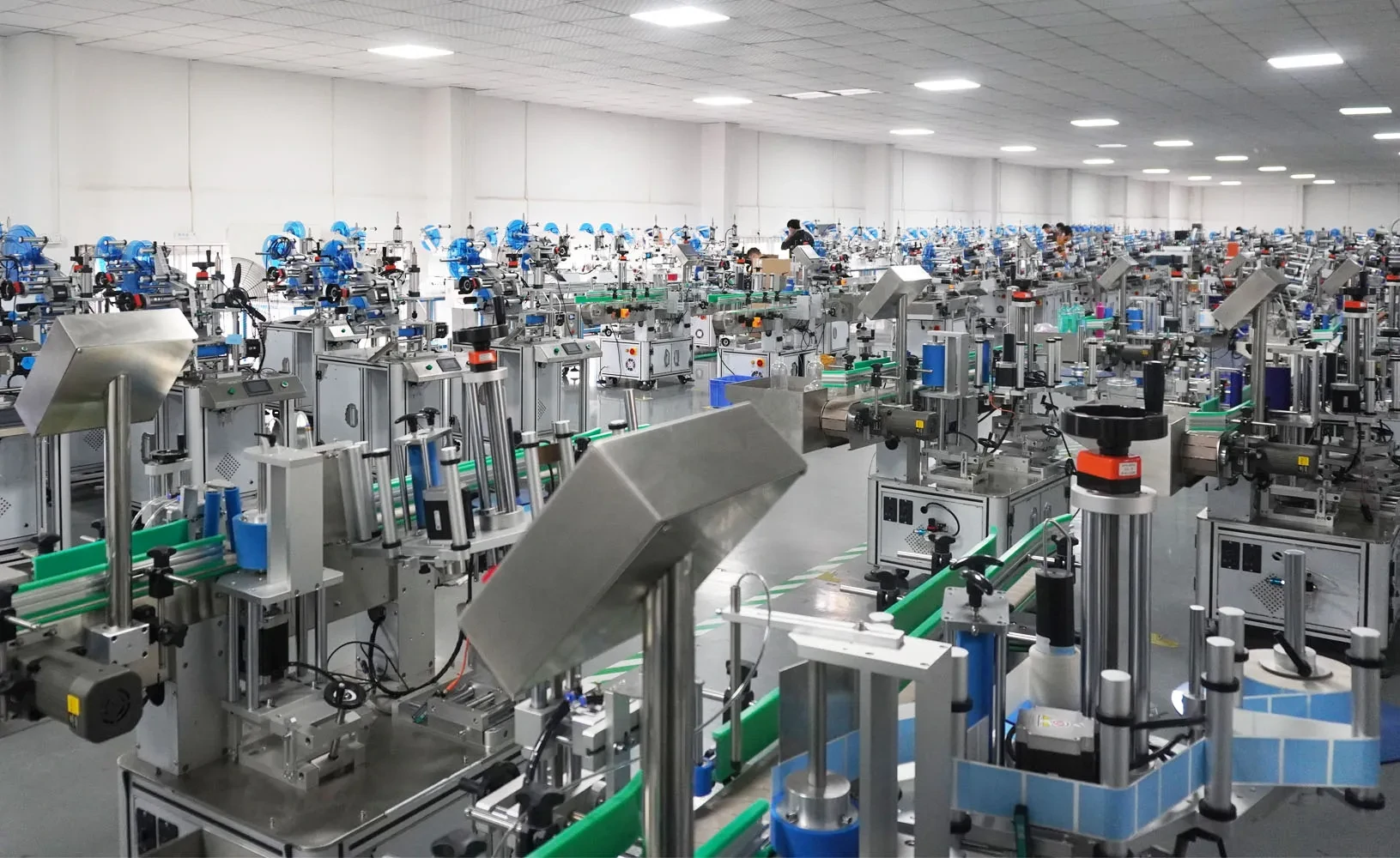
Food businesses that must comply with nutrition labeling regulations often need accurate, reliable labeling machinery during production. Autmachine helps food manufacturers and packagers apply Nutrition Facts labels cleanly and consistently. This is especially useful for products that must include detailed nutrition panels after formulation and testing.
Autmachine’s food labeling equipment is designed to support high output with precise placement, making sure each product meets regulatory and retail standards. Choosing the right labeling solution can streamline compliance and improve your product presentation without distracting from your brand’s core mission.
Get Your Perfect Labeling Machine Today
Send samples or visit for a live demo!
Summary Table: Key Exemptions At A Glance
| Exemption Category | Typical Examples | Needs Nutrition Label? |
|---|---|---|
| Fresh produce | Apples, leafy greens | ❌ Usually exempt |
| Raw fish & seafood | Salmon, shellfish | ❌ Often exempt |
| Minimal nutrient foods | Coffee beans, spices | ❌ Exempt |
| On-site prepared foods | Deli salads, bakery | ❌ Yes for retail packaging |
| Small packages | Tiny snacks | ❌ If no claims |
| Bulk ingredients | Wholesale grains | ❌ Exempt |
| Small business products | Limited sales | ❌ With FDA notice |
| Certain raw meats | Game meat | ❌ Some exemptions |
| Medical foods | Specialty diets | ❌ Regulatory specifics |
FAQ
Fresh fruits and vegetables do not need a Nutrition Facts label when they are sold whole and unprocessed. Stores may provide nutrition information voluntarily, but the FDA does not require a printed nutrition label on the product.
Foods that are not required to have a nutrition label include fresh fruits and vegetables, raw fish without added ingredients, foods with very small amounts of nutrients, and foods prepared and sold for immediate consumption. These foods are exempt under FDA labeling rules when they meet specific conditions.
Foods prepared and sold at bakeries, delis, or salad bars for immediate consumption are usually not required to have a Nutrition Facts label. If the same foods are packaged for retail sale later, labeling rules may apply.
An exempt food must include a Nutrition Facts label if it makes claims such as “low fat” or “high protein,” or if it is packaged for retail sale in a standard consumer format.
Food manufacturers often rely on professional labeling equipment to apply accurate Nutrition Facts labels when required. Labeling machine manufacturers like Autmachine help food producers apply labels consistently, supporting compliance and smooth production without unnecessary complexity.