Stick pack machines are highly efficient, automated packaging systems designed to form, fill, and seal narrow, tubular packets commonly used for single-serve powders, liquids, and gels. Understanding how these machines operate is crucial for optimizing production lines in the food, pharmaceutical, and cosmetic industries. By mastering the mechanics behind stick packaging, manufacturers can significantly enhance output speed, ensure precise dosing, and maintain rigorous quality control standards.
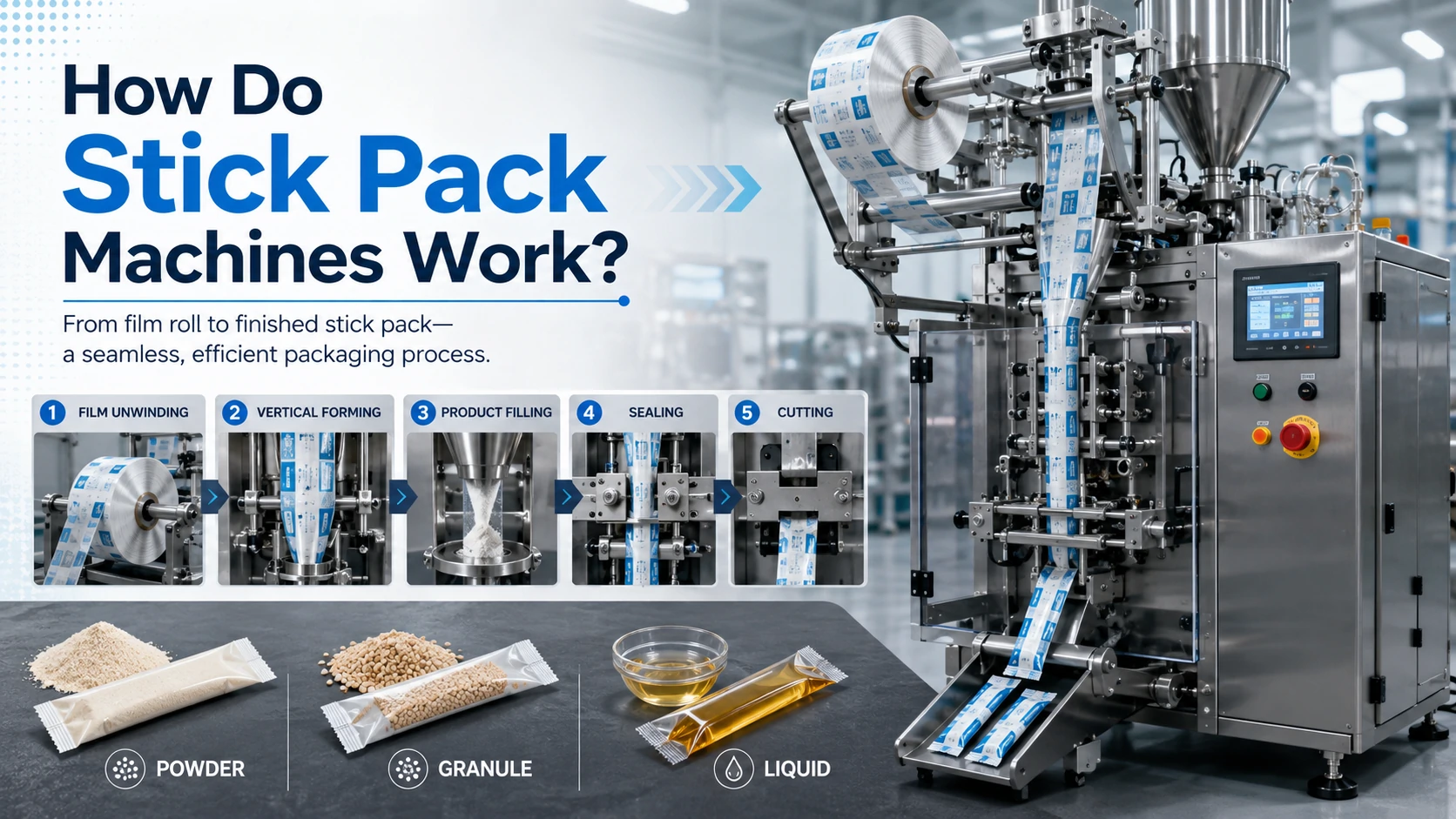
What is stick pack machines?
A stick pack machine is a specialized vertical form, fill, and seal (VFFS) packaging system that transforms a single roll of flexible film into multiple narrow, stick-shaped pouches. These machines are engineered to handle various products, including granular powders, thick liquids, and free-flowing solids, providing a convenient single-dose packaging solution.
Core Components and Functionality
To understand the system, you must look at its primary mechanical sections. Each part plays a synchronized role in the packaging journey:
- Film Unwind System: Holds the large roll of packaging material and feeds it into the machine under constant tension.
- Slitting Assembly: Uses rotary blades to cut the wide web of film into multiple individual lanes.
- Forming Tubes: Shapes the flat, slit film strips into cylindrical tubes ready for sealing.
- Filling Station: Injects the precise product dose (via augers or pumps) into the formed tubes.
- Sealing Jaws: Applies targeted heat and pressure to create secure vertical and horizontal seals.
AUTmachine Pro Tip: Always match your packaging film specifications with the machine’s sealing jaw technology to prevent material burning or weak seals during high-speed production runs.
How Does stick pack machines Work?
Stick pack machines operate through a synchronized process of unwinding film, cutting it into multiple lanes, forming tubes, filling the product, and sealing the ends. This continuous vertical motion allows for high-speed production, often processing dozens of lanes simultaneously to maximize throughput and ensure exact volumetric or gravimetric dosing.
The Step-by-Step Production Cycle
The operation of these machines is a marvel of industrial timing and precision. The cycle follows a strict sequence:
- Film Transport: Roller systems pull the film from the main roll while dancer arms maintain optimal web tension.
- Printing and Tracking: An integrated sensor aligns the film using registration marks, and date or batch codes are applied by thermal printers.
- Slitting: Rotary knives slice the wide film into exact individual strips for each lane.
- Forming and Vertical Sealing: The strips wrap around forming collars, and vertical seal bars weld the edges together to create a continuous tube.
- Filling and Horizontal Sealing: The product drops through the center of the tube into the pouch, followed immediately by horizontal sealing jaws that close the top of one pouch and the bottom of the next, before a cutting blade separates them.
AUTmachine Pro Tip: Regular calibration of your auger or volumetric cup fillers is essential to prevent product giveaway and maintain strict dosing accuracy across all operating lanes.
What are the benefits of stick pack machines?
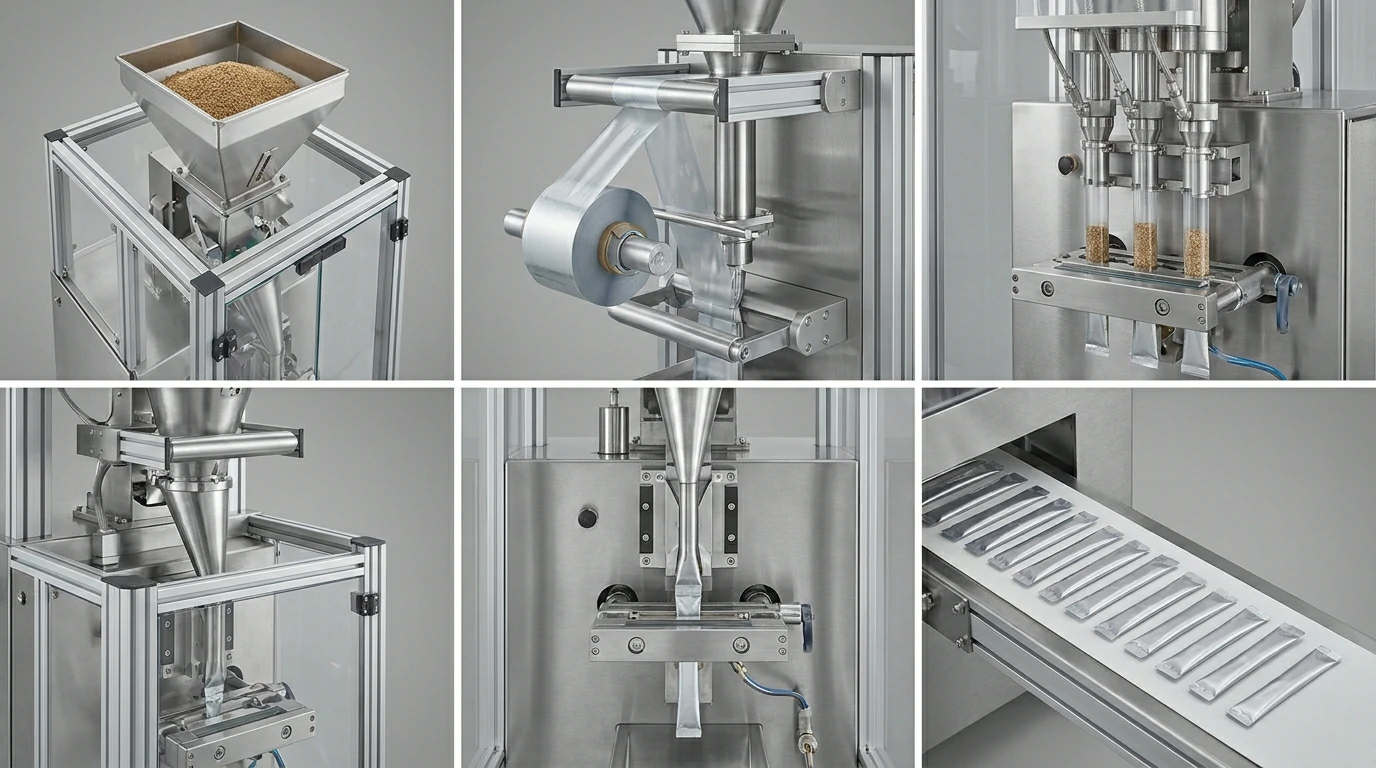
The primary benefits of stick pack machines include exceptional production efficiency, reduced material usage compared to traditional rectangular sachets, and the ability to output highly portable, consumer-friendly single-serve portions. They offer a compact footprint while delivering massive output, making them highly profitable for contract packagers and large-scale manufacturers.
Advantages of Stick Packaging
Investing in this specific type of VFFS machinery yields several distinct operational and marketing advantages:
- Material Savings: Stick packs use up to 40% less film than standard rectangular pouches while holding the same internal volume.
- High Throughput: Multi-lane configurations can produce hundreds, sometimes thousands, of stick packs per minute.
- Versatility: The equipment is easily adaptable for powders, liquids, and granules with simple tooling and filler changes.
- Consumer Convenience: Easy-tear notches and narrow shapes make them ideal for on-the-go consumption, such as pouring drink mixes directly into water bottles.
AUTmachine Pro Tip: Leverage the versatility of these machines by investing in interchangeable dosing systems, allowing you to seamlessly switch between liquid and powder production on the exact same base unit.
How to maintain a stick pack machines?
Maintaining a stick pack machine requires a strict regimen of daily cleaning, regular lubrication of moving parts, and routine inspection of sealing jaws and cutting blades. Proper preventative maintenance minimizes unexpected downtime, extends the lifespan of the equipment, and ensures consistent packaging quality and hygienic operation.
Preventative Maintenance Schedule
To keep your machinery running at peak efficiency, adhere to a structured maintenance calendar:
- Daily Tasks: Clean the filling nozzles, wipe down the sealing jaws to remove product residue, and verify that pneumatic air pressure levels are correct.
- Weekly Tasks: Inspect the slitting knives for dullness, check the Teflon coating on seal bars for wear, and verify that optical sensors are clean and aligned.
- Monthly Tasks: Lubricate bearings and drive chains, inspect pneumatic hoses for micro-leaks, and test all safety interlocks and emergency stops.
- Bi-Annual Tasks: Perform a comprehensive system calibration and proactively replace wear-and-tear parts like timing belts and heating elements.
AUTmachine Pro Tip: Implement a digital maintenance log to track the lifecycle of your cutting knives and heating elements; replacing them proactively prevents catastrophic mid-run failures and product waste.
What is the price of stick pack machines?
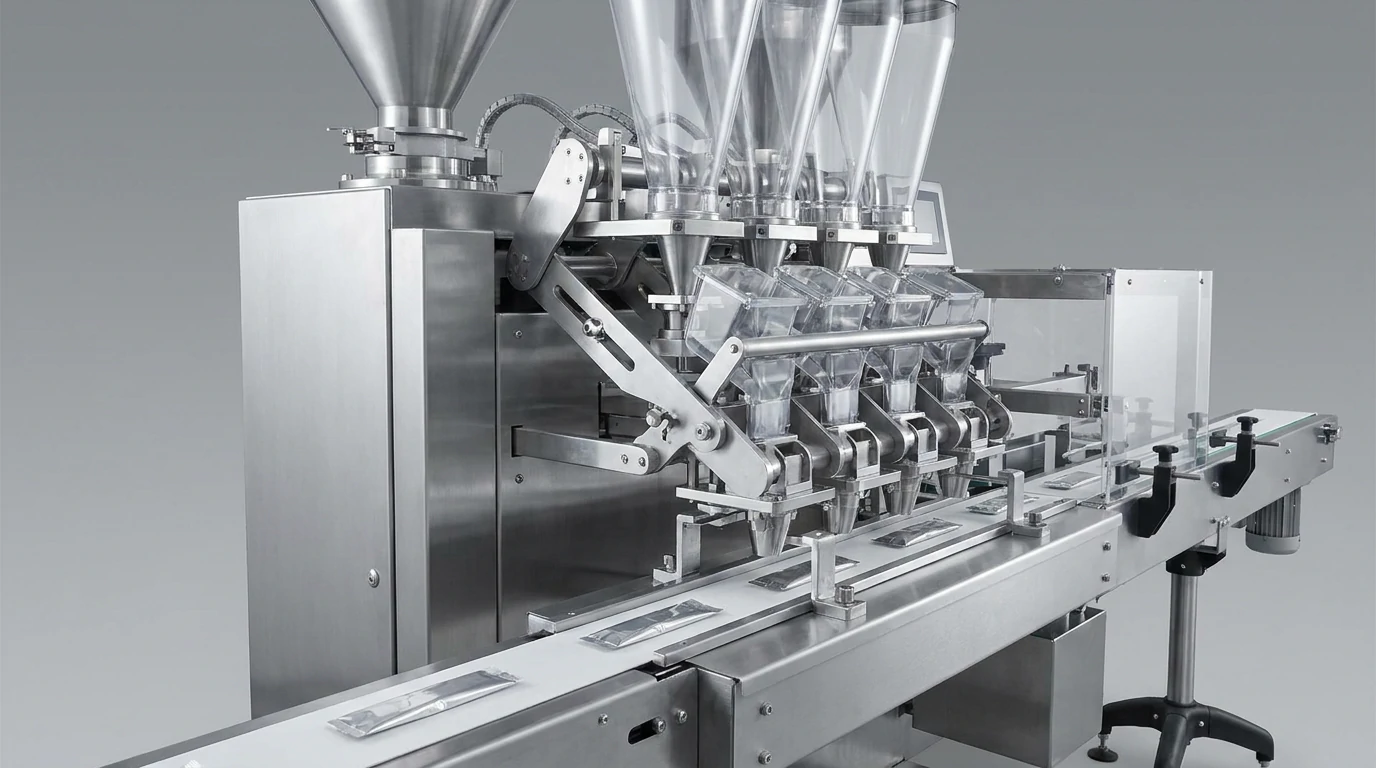
The price of a stick pack machine ranges from $15,000 for basic, single-lane entry-level models to over $150,000 for highly advanced, multi-lane, servo-driven systems. The final cost depends heavily on production capacity, automation levels, integrated dosing systems, and specific industry hygiene and compliance requirements.
Price Tier Breakdown
Based on our internal data and market analysis, here is the breakdown:
| Machine Tier | Estimated Price Range | Best Suited For |
|---|---|---|
| Entry-Level (1-2 Lanes) | $15,000 – $35,000 | Startups, R&D labs, low-volume production |
| Mid-Range (3-6 Lanes) | $40,000 – $85,000 | Growing businesses, medium-scale contract packaging |
| High-End (8+ Lanes) | $90,000 – $150,000+ | Large enterprises, high-speed continuous production |
AUTmachine Pro Tip: When budgeting for new equipment, always factor in an additional 10-15% of the machine’s purchase price to cover initial spare parts, facility installation, and professional operator training.
Key Features & Comparison
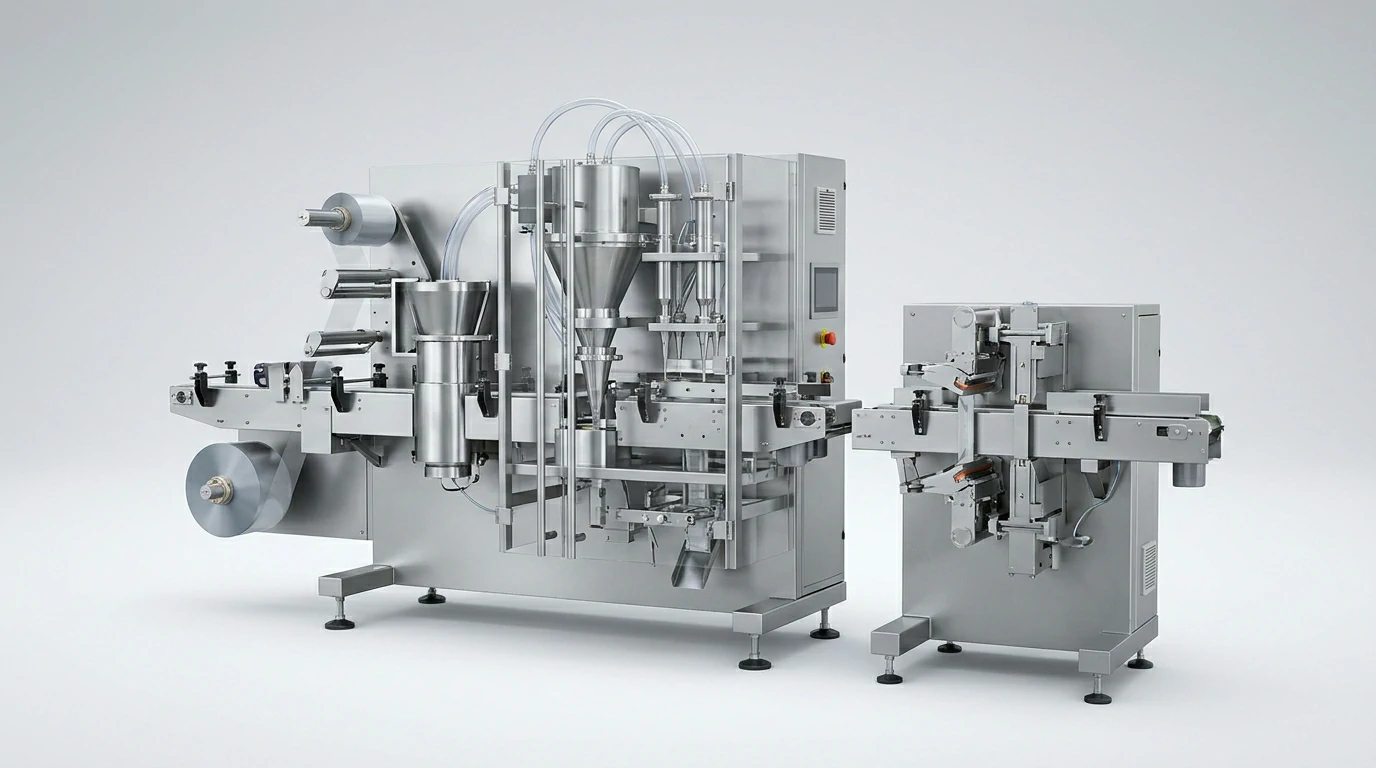
Understanding the key features of different stick pack machines allows manufacturers to align their equipment choices with specific production goals. Comparing drive systems, lane capacities, and sealing technologies is critical for optimizing operational efficiency and achieving the desired return on investment over the machine’s lifespan.
Technical Specifications Comparison
Based on our internal data and market analysis, here is the breakdown:
| Feature | Pneumatic Driven Systems | Servo-Driven Systems |
|---|---|---|
| Initial Capital Cost | Lower | Higher |
| Speed & Precision | Moderate | Exceptionally High |
| Maintenance Needs | Higher (prone to air leaks) | Lower (fewer mechanical wear parts) |
| Changeover Time | Slower (requires manual adjustments) | Faster (HMI digital recipe adjustments) |
| Operational Noise | Louder | Quieter |
AUTmachine Pro Tip: If your production schedule requires frequent recipe, film, or size changes, prioritize a fully servo-driven machine to drastically reduce mechanical changeover times and boost overall equipment effectiveness (OEE).
Cost & Buying Factors
When purchasing a stick pack machine, buyers must evaluate factors beyond the initial sticker price, including total cost of ownership, physical footprint constraints, and downstream integration capabilities. Selecting the right vendor and ensuring the machine can scale with your business are paramount to long-term operational success.
Essential Purchasing Considerations
Before finalizing your equipment procurement, evaluate these critical factors:
- Product Characteristics: Free-flowing powders require different tooling (like volumetric cups) than dusty powders (augers) or sticky gels (piston pumps).
- Facility Space: Ensure the machine’s dimensions, particularly the vertical clearance required for film rolls and product hoppers, fit comfortably within your production floor.
- Integration Capabilities: Consider how the machine’s control system will communicate with downstream equipment like cartoners, checkweighers, or case packers.
- After-Sales Support: Choose a manufacturer that offers rapid spare parts availability, comprehensive warranties, and accessible technical support.
AUTmachine Pro Tip: Request a Factory Acceptance Test (FAT) using your actual bulk product and specific packaging film before finalizing the purchase to guarantee the machine performs exactly to your real-world specifications.
Conclusion
Stick pack machines are transformative assets for any packaging facility, offering unmatched speed, material efficiency, and product versatility. By understanding their mechanics, maintenance requirements, and pricing structures, you can make informed decisions that elevate your production capabilities and meet growing consumer demands for single-serve convenience.
While optimizing your primary packaging is crucial, seamless downstream operations are equally important for a fully automated line. At AUTmachine, we specialize in comprehensive end-of-line solutions. Integrating your stick pack output with a high-quality automatic labeling machine ensures your secondary packaging, such as cartons or master bags, is branded, tracked, and barcoded with flawless precision. Contact AUTmachine today to discover how our advanced automation technology can complete and streamline your entire packaging workflow.
FAQ
A: A stick pack machine is an automatic packaging machine that forms, fills, seals, and cuts slim single-serve packets from a roll of packaging film.
A: It works by unwinding film, forming it into narrow tubes, filling the product, sealing the pack, and cutting it into finished stick packs.
This process is commonly used for powders, granules, liquids, and gels.
Q3: What products can be packed by stick pack machines?
A: Stick pack machines can package instant coffee, sugar, protein powder, drink powder, medicine powder, sauces, gels, honey, and small granules.
A: Focus on three key points: product type, required speed, and filling accuracy.
Choose an auger filler for powders, a pump filler for liquids, and a volumetric or weighing system for granules.
A: They save packaging material, improve production efficiency, and create convenient single-use packs.